
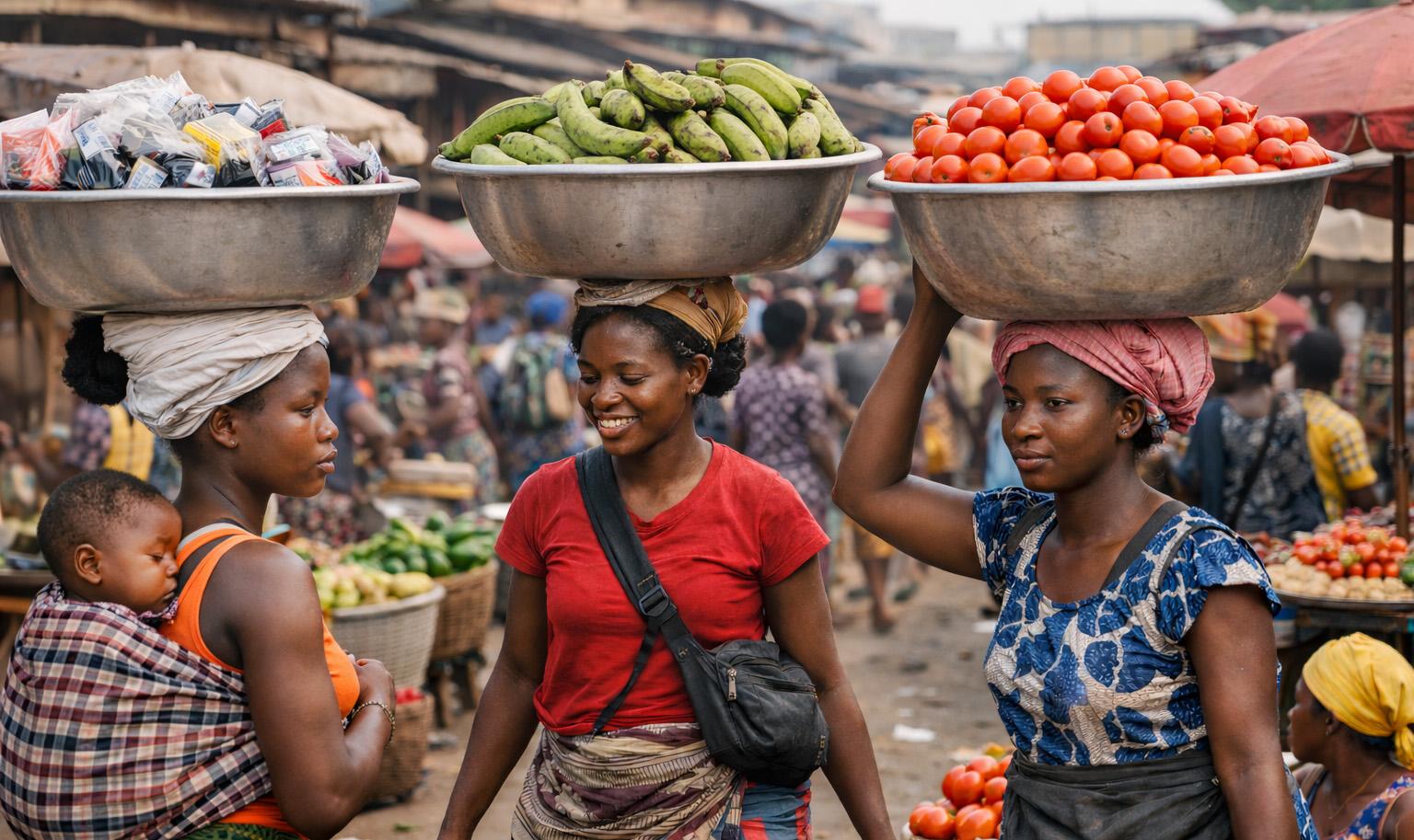
Women migrant head porters in Kumasi who have strong ties with family members, friends, customers, and people from their ethnic group are better placed to sustain their livelihoods, a new study at Kwame Nkrumah University of Science and Technology, Kumasi, has found.
The research, published in Women's Studies International Forum, draws on a survey of 120 female migrant head porters, locally known as kayayei, at two locations in the Kumasi Metropolis, Sokoban and the Central Business District.
The study was led by Dr. Lawrence Guodaar from the Department of Geography and Rural Development.
Family ties were the most common form of social network among participants, with 80 percent reporting reliance on them. Friendship ties came next at 78 percent, followed by religious ties at 67 percent and ethnic ties at 63 percent.
The study found that literate women migrant porters were more than twice as likely to generate income through their social networks compared to those who could not read or write. Younger women migrants, particularly those between 15 and 30 years, also made more use of social networks to earn income.
The kayayei received different kinds of support through these networks, including money from regular customers, job leads from friends, safety tips from older migrants, and emotional comfort from those who shared their ethnic background.
Some participants reported they felt ashamed or humiliated when they were seen as too dependent on others for help, and many became reluctant to ask again after being turned away or mocked.
The researchers advocated for stronger formal support systems to sustainably enhance the livelihoods of female migrant workers in Ghana's informal sector.
Other co-authors are Justice Owusu Domfeh, Joseph Yaw Yeboah, Emma Abena Otema Sefa, and Theodora Yendoh from the Department of Geography and Rural Development, Paul Kwasi Kumah and Hubert Bimpeh Asiedu from the Department of Sociology and Social Work and Godfred Addai, all of KNUST.